|
Unlocking Intelligent Edge Management with Portwell’s PNSR-5002 and BMC |
|
|
12/05/2025, by American Portwell Editorial Team |
|
|
|
|
|
|
|
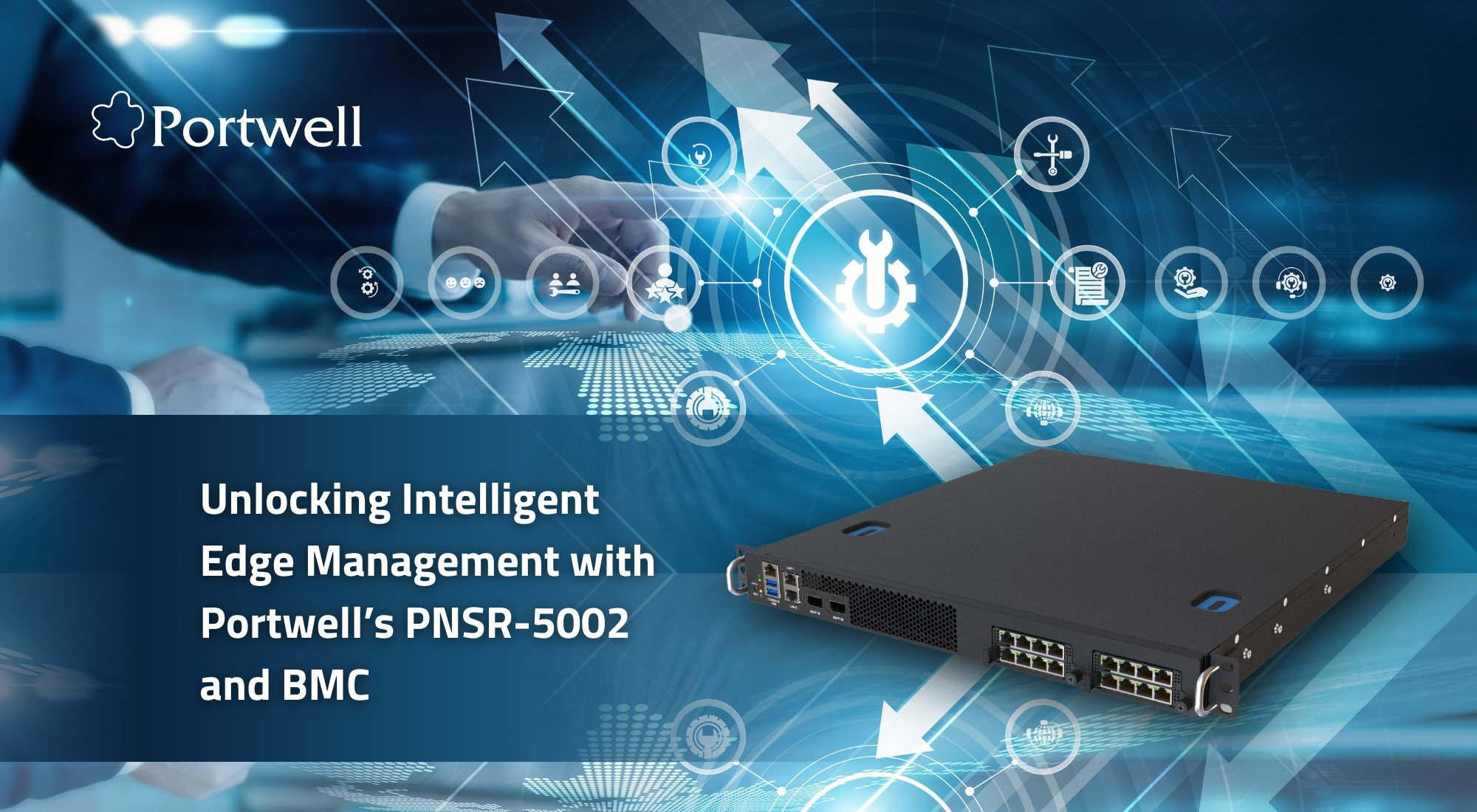
As edge computing becomes the foundation of modern digital infrastructure—from telecom and industrial automation to secure networking and AI inference—the need for intelligent, secure, and remote system management is more critical than ever. With workloads growing more complex and distributed, IT teams require tools that offer visibility and control without physical access. Portwell’s PNSR-5002, powered by the Intel® Xeon® 6 SoC, is a next-generation network system designed to meet these demands head-on. With its integrated AST2600 Baseboard Management Controller (BMC), the PNSR-5002 delivers enterprise-grade remote management capabilities, making it a standout solution for secure edge deployments, telecom infrastructure, and intelligent automation. Engineering Behind the Scenes: Performance and Security at the EdgeDesigning the PNSR-5002 was about more than just performance—it was about building a platform that could thrive in real-world edge environments. Portwell’s engineering team selected the Intel Xeon 6 SoC for its high core count (up to 42 cores), support for DDR5 ECC RDIMM, and advanced security features such as Intel® Total Memory Encryption (TME), Software Guard Extensions (SGX), and Trust Domain Extensions (TDX). While the Xeon 6 SoC delivers the compute density and memory bandwidth required for edge AI and telecom workloads, performance alone doesn’t guarantee resilience. To make the system truly autonomous—capable of operating and recovering without manual intervention—Portwell paired it with a robust Baseboard Management Controller (BMC). This integration enables remote monitoring, zero-touch provisioning, and self-healing capabilities, which are critical in distributed edge deployments where physical access is limited. To support secure remote management, Portwell integrated the AST2600 BMC from ASPEED—a widely adopted ARM-based controller used in enterprise servers. The BMC operates independently of the main CPU and OS, enabling administrators to monitor, troubleshoot, and recover systems remotely. The engineering team also implemented Platform Firmware Resilience (PFR) via the AST1060 companion chip and made TPM 2.0 available for secure boot and cryptographic operations. These additions ensure the system remains trustworthy and tamper-resistant, even in hostile or disconnected environments. What Is BMC and Why It MattersA Baseboard Management Controller (BMC) is a specialized microcontroller embedded on the motherboard that enables out-of-band management. This means it can operate independently of the system’s main processor and operating system, providing critical access even when the system is powered off or unresponsive. Key BMC Functions:
The PNSR-5002’s AST2600 BMC supports IPMI, giving administrators flexible options for integration with existing tools and automation platforms. IPMI: Trusted, Compatible, and Still EssentialWhile newer protocols like Redfish are gaining traction in cloud-native and hyperscale data center environments due to their RESTful design and integration capabilities, IPMI remains the industry standard for out-of-band management in many embedded and edge systems. Its widespread support, stability, and compatibility make it a reliable choice for platforms like Portwell’s PNSR-5002. The PNSR-5002’s AST2600 BMC supports IPMI, enabling robust remote management capabilities such as:
Portwell’s decision to leverage IPMI ensures broad compatibility and ease of integration for system administrators and OEMs deploying edge solutions today. Security and Reliability: Built-In, Not Bolted OnRemote management introduces new risks, especially if BMCs are misconfigured or exposed to public networks. Portwell addresses these concerns with a multi-layered security approach: Security Best Practices Implemented:
These features are especially important in telecom, SASE, and industrial edge deployments, where physical access is limited and threat surfaces are broader. BMC Setup Guide: Getting Started with AST2600For system integrators and IT teams deploying the PNSR-5002, here’s a simplified checklist to configure the BMC securely: BMC Setup Checklist:
This setup ensures that the BMC remains a secure and reliable management interface throughout the system’s lifecycle. Real-World Applications: Where PNSR-5002 EmpowersThe PNSR-5002 isn’t just server-grade powerful—it’s a platform built for mission-critical edge workloads. Here are a few scenarios where its BMC capabilities make a real difference:
Competitive Advantage: More Than Just SpecsMany edge systems still rely on basic management tools or lack out-of-band capabilities altogether. By integrating a full-featured BMC, Portwell sets the PNSR-5002 apart as a premium, enterprise-grade solution. Compared to Older Platforms:
This combination makes the PNSR-5002 ideal for organizations looking to scale securely, automate operations, and reduce total cost of ownership. Conclusion: Intelligent Management for a Smarter EdgeThe edge is evolving—becoming smarter, faster, and more demanding. Portwell’s PNSR-5002 rises to meet these challenges with a powerful compute platform, robust security features, and intelligent remote management enabled by its integrated BMC. Whether you're deploying in telecom, industrial automation, or secure networking, the PNSR-5002 equips you with the tools to stay in control, adapt quickly, and maintain operational resilience. By combining the high-performance Intel Xeon 6 SoC with the flexibility of the AST2600 BMC, Portwell delivers a solution that’s not just ready for today’s dynamic networks—it’s built for tomorrow’s. Intel and Intel Xeon are trademarks of Intel Corporation. All other products and company names referred to herein may be trademarks or registered trademarks of their respective companies or mark holders. |
|

-
Products
-
Computer-On-Module
- COM-HPC Modules
- COM Express & ETX Modules
- Qseven Modules
- SMARC Modules
- SODIMM SOMs
- MicroSOM Modules
Industrial PC Products
- Single Board Computers (SBC)
- Industrial Backplanes
- Industrial Chassis
- Industrial Power Supplies

Embedded Computing
- Embedded Systems
- Mini-ITX Boards
- Mini-ITX Boards Low Power
- Nano-ITX Boards
- NUC Boards
- 3.5" ECX/Pico-ITX/Femto-ITX
- Industrial ATX/FlexATX/MicroATX Boards
Medical Computers
- Medical Computers
Gaming Appliances
- Gaming Appliances

Network Appliance
- X86 Platforms
- Network & Bypass Cards
- 4G LTE Modules
- LCD Modules
Server
- Servers
- Server Motherboard
INTELLIGENT SYSTEMS
- Industrial IoT Appliances
- Edge AI & Industrial GPU Computers

Human Machine Interfaces
- Medical Displays
- Medical Panel PCs
- Industrial Monitors
- Industrial Panel PCs
Industrial I/O
- Industrial I/O
- Contec Industrial I/O
INDUSTRIAL FLASH & MEMORY
- Industrial SSD

-
- Solutions
- Support Center
- Contact Us
- About Us


1-877-APT-8899
1-510-403-3399
info@portwell.com
Copyright © by American Portwell Technology, Inc. All Rights Reserved